

In the field of vacuum packaging, the choice of film material directly affects a product's shelf life, visual presentation, and seal reliability. As a functional multilayer co-extruded film, White Vacuum Packaging Film is increasingly used in the packaging of meat, seafood, and frozen foods due to its opaque appearance and excellent sealing performance. This article explains the core characteristics of this film from the perspectives of material structure, sealing technology, and application scenarios.

Multilayer Co-extrusion Structure:
A Functional Layer Design Where Each Layer Fulfills a Specific Role
White Vacuum Packaging Film employs a multilayer structure, in which polymer layers with different functions are laminated together through a co-extrusion process. Each layer has a specific role: the forming layer provides the ductility required for thermoforming; the support layer imparts mechanical strength and puncture resistance; the white functional layer ensures a uniform, opaque appearance; and the heat-seal layer guarantees the final seal integrity. This synergistic interlayer design enables the film to meet the strength requirements of vacuum packaging while delivering consistent visual presentation of the product. The film's thickness, width, barrier configuration, and roll format can all be adjusted according to packaging requirements, reflecting specification flexibility and accommodating varying forming depths and packaging line speeds.
White Functional Layer:
More Than Just Aesthetic Appeal
The white opaque layer is a distinctive feature of this film. It achieves high opacity through the addition of white pigments, preventing the packaged product from being directly visible. This design not only helps preserve the color of light-sensitive foods but also assists brands in establishing a unified visual identity on the shelf. At the same time, the white layer is tightly integrated with other functional layers without compromising the film's mechanical or heat-sealing properties, ensuring a harmonious balance between appearance and functionality.


Surlyn-Based Sealing Interface: The Core of High-Performance Heat Sealing
The sealing side of this film utilizes a Surlyn-based sealing interface. Surlyn is an ethylene-acrylic copolymer ionic resin developed by DuPont, featuring excellent thermal tack, resistance to contamination during sealing, and resistance to oils and acids. During the vacuum packaging process, the sealing layer forms a strong seal with the matching tray or bottom film under heat and pressure, effectively blocking oxygen and moisture to extend the product's shelf life. Sealing conditions can be precisely set based on film thickness and compatible materials, making it particularly suitable for vacuum packaging and skin packaging applications that demand extremely high seal integrity.
Vacuum Packaging Applications: The Ideal Choice for Meat, Seafood, and Frozen Foods
White vacuum packaging film is widely used for vacuum-sealed packaging of meat and frozen foods. In a vacuum environment, the film adheres tightly to the product's surface, expelling air to inhibit microbial growth while preventing juice leakage and frost formation. The white appearance also masks minor color variations that may occur during processing or transportation, enhancing the final display appeal. For packaging requiring medium- or high-barrier performance, different shelf-life requirements can be met by adjusting the formulation of the functional layer.
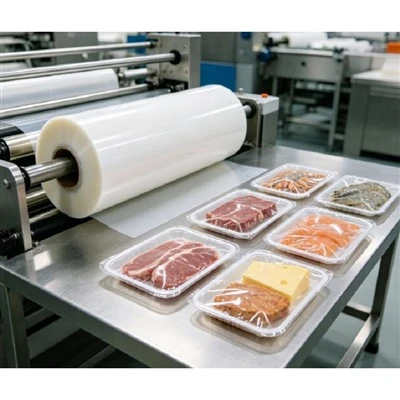
Currently, domestic packaging companies, such as Dongguan Promivision Packaging Manufactory, have accumulated extensive experience in the field of multilayer extrusion, and their white vacuum packaging films are widely used in the food processing industry both domestically and internationally. Understanding the structure and principles of this film helps packaging users make more informed material selections, thereby optimizing both packaging efficiency and product protection.


