

What is the maximum weight a skin packing tray can hold? This is a question that often comes up in the packaging industry, especially when dealing with products of various weights and sizes. As a skin packing tray supplier, I've encountered this query numerous times from our clients. In this blog post, I'll delve into the factors that determine the maximum weight a skin packing tray can hold, and provide some insights based on our experience and industry knowledge.
Factors Affecting the Maximum Weight Capacity
Material of the Tray
The material used to manufacture the skin packing tray plays a crucial role in determining its weight - holding capacity. Commonly, skin packing trays are made from materials such as polystyrene (PS), polypropylene (PP), and polyethylene terephthalate (PET).
Polystyrene trays are lightweight and cost - effective. They are suitable for holding relatively light - weight products. For instance, a standard PS skin packing tray with a thickness of around 0.5mm can typically hold up to 1 - 2 kilograms. However, their strength is limited, and they may crack or break under heavier loads.
Polypropylene trays are more durable and have better impact resistance compared to polystyrene. A PP tray with a similar thickness can hold approximately 2 - 3 kilograms. The higher molecular structure of polypropylene gives it more flexibility and strength, making it a good choice for products that are a bit heavier.
Polyethylene terephthalate trays are known for their high strength and clarity. They can hold even heavier weights. A well - designed PET skin packing tray with a thickness of 0.7mm or more can hold up to 5 kilograms or even more, depending on its design and shape.
Tray Design
The design of the skin packing tray also significantly affects its weight - holding capacity. Trays with reinforced edges or ribs can distribute the weight more evenly, increasing their overall strength. For example, a tray with a ribbed bottom design can handle more weight than a flat - bottomed tray of the same material and thickness.

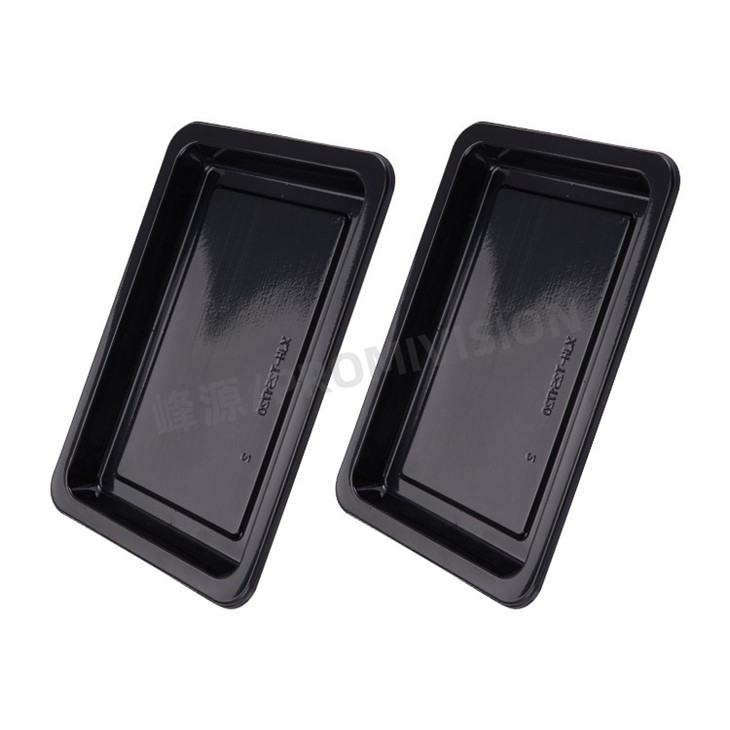
The shape of the tray is another important factor. Rectangular or square trays generally have better weight - distribution properties compared to irregularly shaped trays. Additionally, the depth of the tray matters. Deeper trays can provide more support for the product, especially if the product has a certain height or volume.
Skin Film
The skin film used in conjunction with the tray also contributes to the overall weight - holding capacity. A high - quality skin film with good tensile strength can help hold the product in place and distribute the weight across the tray. When the skin film is tightly sealed around the product and the tray, it adds an extra layer of support. Thicker and stronger skin films can enhance the weight - holding ability of the entire skin packing system.
Real - World Examples and Case Studies
Let's take a look at some real - world examples to better understand the maximum weight a skin packing tray can hold.
In the food industry, skin packing trays are widely used to package meat, cheese, and other food products. For packaging small cuts of meat, such as steaks or chicken breasts, a PS skin packing tray can be sufficient. These trays can typically hold around 0.5 - 1 kilogram of meat. The skin film helps to keep the meat fresh and in place, and the tray provides basic support.
For larger cuts of meat or multiple pieces of meat, a PP or PET tray is more appropriate. A PP tray can hold up to 3 kilograms of meat, while a PET tray can handle even larger quantities. In a recent project, we supplied Golden Colored Skin Pack Tray to a meat processing company. These trays were used to package large roasts weighing up to 4 kilograms. The trays were designed with reinforced edges and a ribbed bottom, which helped to distribute the weight evenly and prevent the tray from collapsing.
In the electronics industry, skin packing trays are used to package small electronic components. A small PS or PP tray can hold a few hundred grams of components. However, for larger electronic devices, such as tablets or small laptops, a stronger PET tray is required. We once supplied Black Skin Pack Tray to an electronics manufacturer for packaging tablets. These trays were designed to hold the tablets securely and could withstand the weight of the device, along with any additional accessories.
Testing and Quality Assurance
At our company, we conduct rigorous testing to determine the maximum weight capacity of our skin packing trays. We use a variety of testing methods, including compression testing and drop testing.
Compression testing involves applying a gradually increasing load to the tray until it fails. This helps us to determine the maximum weight the tray can hold before it deforms or breaks. Drop testing is also important, as it simulates real - world handling and transportation conditions. We drop the packed tray from a certain height to see if the tray and the product inside can withstand the impact.
We also follow international standards and regulations to ensure the quality and safety of our products. By conducting these tests and adhering to standards, we can provide our clients with accurate information about the maximum weight capacity of our skin packing trays.
How to Choose the Right Skin Packing Tray for Your Product
When choosing a skin packing tray for your product, you need to consider the weight, size, and shape of the product. First, determine the approximate weight of your product. Based on the weight, you can choose the appropriate material for the tray.
If your product is light - weight, a PS tray may be a cost - effective option. For medium - weight products, a PP tray is a good choice, and for heavy - weight products, a PET tray is recommended.
You also need to consider the design of the tray. Make sure the tray has a suitable shape and depth to accommodate your product. If possible, choose a tray with reinforced edges or ribs for better weight distribution.
Finally, don't forget about the skin film. Select a high - quality skin film that matches the strength of the tray and provides good sealing properties.
Conclusion
In conclusion, the maximum weight a skin packing tray can hold depends on several factors, including the material of the tray, its design, the skin film used, and the testing and quality assurance processes. As a skin packing tray supplier, we have the expertise and experience to provide you with the right solution for your packaging needs.
If you are interested in our Skin Packaging Tray or have any questions about the maximum weight capacity of our trays, we encourage you to contact us for a detailed discussion. We can help you choose the most suitable tray for your product and ensure that your packaging meets your requirements. Whether you are in the food industry, electronics industry, or any other industry that requires skin packing solutions, we are here to assist you.
References
- Packaging Technology Handbook, Third Edition. Edited by Wilmer A. Jenkins and James P. Harrington.
- Plastics Packaging: Properties, Processing, Applications, and Regulations. By Rosato's Plastics Encyclopedia and Dictionary.