

As a supplier of skin packing film, I often encounter inquiries from customers about various technical specifications of the film, one of the most crucial being the oxygen transmission rate (OTR). Understanding the oxygen transmission rate of skin packing film is essential for both producers and users, as it directly impacts the shelf - life and quality of the packaged products.
What is Oxygen Transmission Rate?
The oxygen transmission rate refers to the quantity of oxygen gas that passes through a specific area of a film under defined temperature, humidity, and pressure conditions within a given time frame. It is typically measured in units such as cc/m²/day (cubic centimeters per square meter per day). A lower OTR indicates that the film has better oxygen - barrier properties, which is highly desirable for many applications.
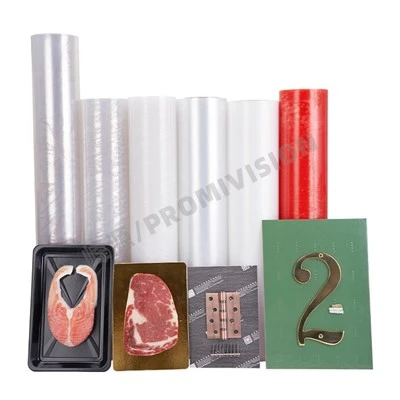

Why is OTR Important in Skin Packing Film?
- Food Preservation: In the food industry, oxygen is one of the main factors that cause spoilage. It can lead to oxidation of fats, which results in rancidity, and promote the growth of aerobic microorganisms. By using skin packing film with a low OTR, the amount of oxygen in contact with the food can be significantly reduced, thereby extending the product's shelf - life and maintaining its freshness and flavor. For example, fresh meat, cheese, and bakery products can benefit greatly from a skin packing film with excellent oxygen - barrier properties.
- Product Protection: For non - food products, such as electronics and pharmaceuticals, oxygen can also cause damage. In electronics, oxygen can lead to corrosion of metal components, while in pharmaceuticals, it can degrade the active ingredients. A skin packing film with a proper OTR can provide a protective barrier against oxygen, ensuring the integrity and functionality of these products.
Factors Affecting the Oxygen Transmission Rate of Skin Packing Film
- Film Material: Different polymers used in skin packing film have varying oxygen - barrier capabilities. For instance, polyvinylidene chloride (PVDC) is known for its extremely low OTR, making it a popular choice for applications where high - level oxygen protection is required. On the other hand, polyethylene (PE) has a relatively high OTR, but it is often used in combination with other polymers or in applications where less oxygen - barrier performance is needed.
- Film Thickness: Generally, a thicker film will have a lower OTR compared to a thinner one. As the thickness of the film increases, the path for oxygen molecules to pass through becomes longer, which reduces the overall oxygen transmission. However, increasing the film thickness also has its drawbacks, such as higher material costs and potentially reduced flexibility.
- Temperature and Humidity: The OTR of skin packing film is highly influenced by environmental conditions. Higher temperatures and humidity levels can increase the mobility of oxygen molecules, leading to a higher OTR. Therefore, when specifying the OTR of a film, it is important to consider the storage and transportation conditions of the packaged products.
Measuring the Oxygen Transmission Rate
There are several methods available for measuring the OTR of skin packing film. One of the most common methods is the coulometric method. In this method, a sample of the film is placed between two chambers, one containing oxygen and the other a carrier gas. Oxygen molecules pass through the film and are detected by a coulometric sensor, which measures the amount of oxygen transmitted. Another method is the manometric method, which measures the change in pressure in a chamber due to the passage of oxygen through the film.
Our Skin Packing Film and OTR
At our company, we offer a wide range of Skin Pack Film with different OTR values to meet the diverse needs of our customers. Our Vacuum Skin Film is carefully engineered to provide optimal oxygen - barrier performance while maintaining other important properties such as clarity, flexibility, and heat - sealability.
For applications that require a high - level of oxygen protection, we recommend our VSP Vacuum Skin Film. This film is made from advanced polymers and has a very low OTR, making it ideal for packaging perishable food products and sensitive non - food items.
Customizing OTR for Specific Applications
We understand that different products have different requirements when it comes to oxygen protection. That's why we offer customized solutions to meet the specific OTR needs of our customers. Our team of experts can work closely with you to analyze your product's characteristics and the intended storage and transportation conditions, and then recommend the most suitable skin packing film with the appropriate OTR.
Contact Us for Purchase and Consultation
If you are interested in learning more about the oxygen transmission rate of our skin packing film or are looking for a reliable supplier for your packaging needs, we encourage you to contact us. Our sales team is ready to provide you with detailed product information, samples, and competitive pricing. Whether you are a small - scale producer or a large - scale manufacturer, we are committed to providing you with high - quality skin packing film that meets your specific requirements.
References
- ASTM D3985 - Standard Test Method for Oxygen Gas Transmission Rate Through Plastic Film and Sheeting Using a Coulometric Sensor
- ISO 15105 - 1 - Plastics -- Film and sheeting -- Determination of gas - transmission rate -- Part 1: Differential - pressure method